
🎩 Keynote Speakers
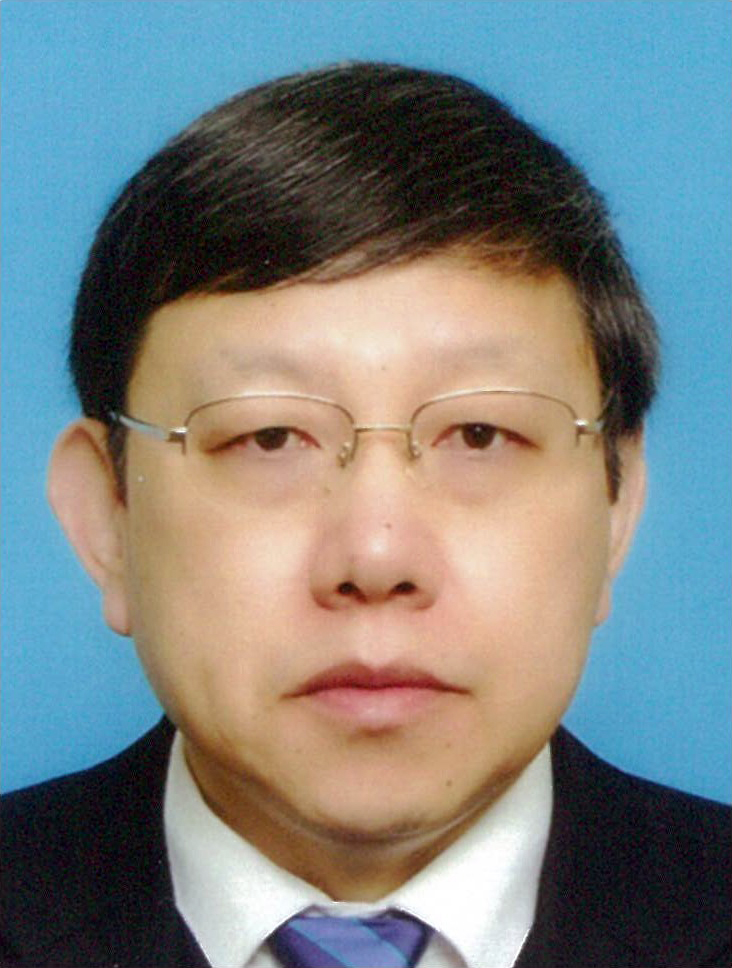
Prof. Mingcong Deng received his PhD in Systems Science from Kumamoto University, Japan, in 1997. From 1997.04 to 2010.09, he was with Kumamoto University; University of Exeter, UK; NTT Communication Science Laboratories; Okayama University. From 2010.10, he has been with Tokyo University of Agriculture and Technology, Japan, as a professor. Prof. Deng has over 550 publications including 195 journal papers, in peer reviewed journals including IEEE Transactions, IEEE Press and other top tier outlets. Prof. Deng is a chair of agricultural robotics and automation technical committee, IEEE RA Society; Chair of the environmental sensing, networking, and decision making technical committee, IEEE SMC Society; Member of IEEE SMC SSE committee; Representative of IEEE Systems Council AdCom. He was the recipient of 2014 & 2019 Meritorious Services Award of IEEE SMC Society, 2020 IEEE RAS Most Active Technical Committee Award. He is a fellow of AAIA, and a member of The Engineering Academy of Japan.
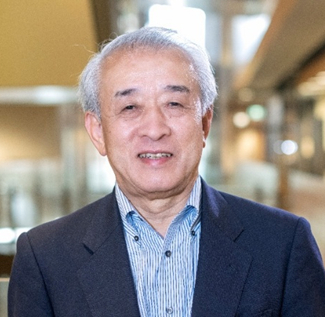
Solar photovoltaics (PV) are expected to play a massive role in the world in order to mitigate climate change. Figure 1 shows installed capacity of various energy sources in 2050 reported by the IRENA [1]. The PV is expected to contribute as No. 1 energy source with share of about 46.9%. Following, 20.4% for onshore wind, 8.2% for hydro, 6.6% for offshore wind, 6% for gas, 2.7% for CSP, 2.3% for biomass, 1.7% for nuclear, 1.1% for tide and 0.9% for geothermal are listed in the IRENA prediction [1].
PV is thought to be ready to become one of main energy sources, several developments are necessary. We need 1) to develop high-efficiency, low-cost and highly reliable PV materials, cells, modules and systems, 2) to develop smart energy management including regulations, and self-consumption in cooperation with storage battery technologies, and 3) to develop new application fields such as automobile and agriculture applications.
This paper discusses about application potential of various advanced solar cells such as Si tandem and perovskite solar cells. In the presentation, our recent result for world record efficiency (33.7%) InGaP/GaAs/Si tandem solar cell module approaches for solar-vehicle applications [5] are also presented.
Biography: Dr. Masafumi Yamaguchi is Professor Emeritus and Invited Research Fellow at the Toyota Technological Institute. He is the Chairman of PV R&D Review Committee under NEDO since 2008. He has received numerous awards including the Becquerel Prize (2004), William Cherry Award (2008), and the Purple Ribbon Medal from the Emperor in 2025.

Masayuki Morimoto received his BSc, MSc and PhD degree all in electrical engineering from Keio University, Japan. He worked at Mitsubishi Heavy Industries, Ltd. from 1977 to 2005. From 2005 to 2018, he was a Professor at the Department of electrical and electronics engineering, Tokai University.
His research interests are in the areas of power electronics and its applications, electric machines and drives, and vehicle application. He is a Fellow of IEEJ, member of IEEE and several academic societies. He is the single author of 10 technical books and the coauthor/editor of more than 10 technical books in Japanese.

Abstract: As the world accelerates toward net-zero ambitions, the fusion of digital intelligence with clean energy systems is no longer optional, it is imperative. The talk explores how emerging trends in artificial intelligence, blockchain, and digital twin technologies are fundamentally reshaping the planning, operation, and resilience of sustainable power systems.
AI enables predictive analytics for renewable generation and demand forecasting, while blockchain introduces decentralized, transparent energy transactions. Digital twins offer real-time virtual replicas of physical assets, allowing operators to simulate, diagnose, and optimise performance without risk. The talk synthesises lessons from Thailand’s experience and outlines a roadmap for scaling such solutions across Asia and beyond.